When I first arrived in Santiago, I expected a city defined by scattered “points of interest”—a few landmarks where tourists simply check off boxes on a map. However, exploring it revealed a “layered structure”: the hills offer an elevated perspective, the plazas form the historical core, the parks serve as buffer zones, and the wine regions beyond the city limits act as an extended dimension.
The travel experience here isn’t just about visiting specific sites; it is about gradually immersing oneself in the city’s spatial logic.
Cerro San Cristóbal: The Panoramic Framework of the City
My experience at Cerro San Cristóbal served as the starting point for understanding Santiago.
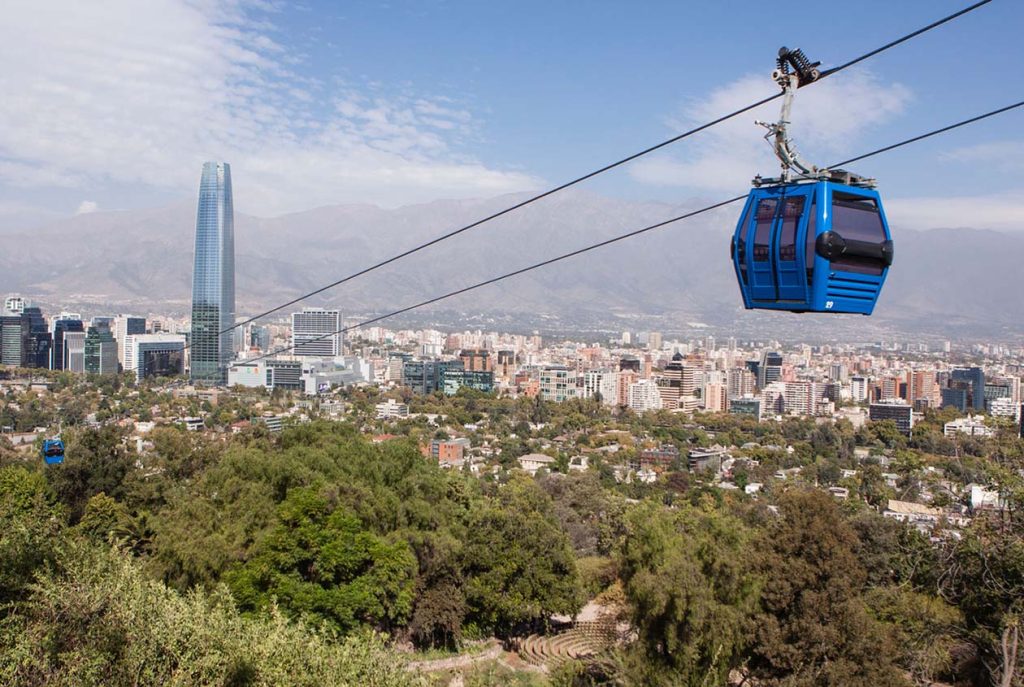
The ascent is a clear progression: as the funicular slowly rises, the city transforms from a collection of “everyday details” into a “structural map.” Streets cease to be mere paths and become lines; buildings stop being individual structures and become blocks of density.
One moment left a particularly deep impression: as the funicular passed the halfway mark, the city suddenly unfolded completely—revealing an orderly urban grid ahead and the massive silhouette of the Andes Mountains in the distance.
Standing at the summit, I didn’t feel “awed” so much as I felt a sense of “clarity.” Santiago is not a city of chaotic sprawl, but a structured urban environment shaped by natural boundaries.
With the hilltop church, statues, and observation decks situated at varying elevations, each point offers a unique perspective, turning the city into something that can be “read” and understood.
Cerro Santa Lucía: A Micro-Elevation System Within the City
Compared to Cerro San Cristóbal, Cerro Santa Lucía offers an “embedded perspective” from within the city itself.
It is not a high hill, but it is exquisitely designed.
The path to the top is terraced, interspersed with fountains, gardens, and small plazas. With every segment of the climb, the view shifts: sometimes a close-up of the streets, other times a look at rooftops, and at other moments, the distant mountain skyline.
My time there felt unique—it didn’t feel like “hiking a mountain,” but rather like “switching urban perspectives.”
The summit platform is small, yet it offers a remarkably clear view of the city’s texture: the boundaries of neighborhoods, the flow of traffic, and the locations of plazas all become legible.
Plaza de Armas: A central node of urban history and a hub where crowds converge
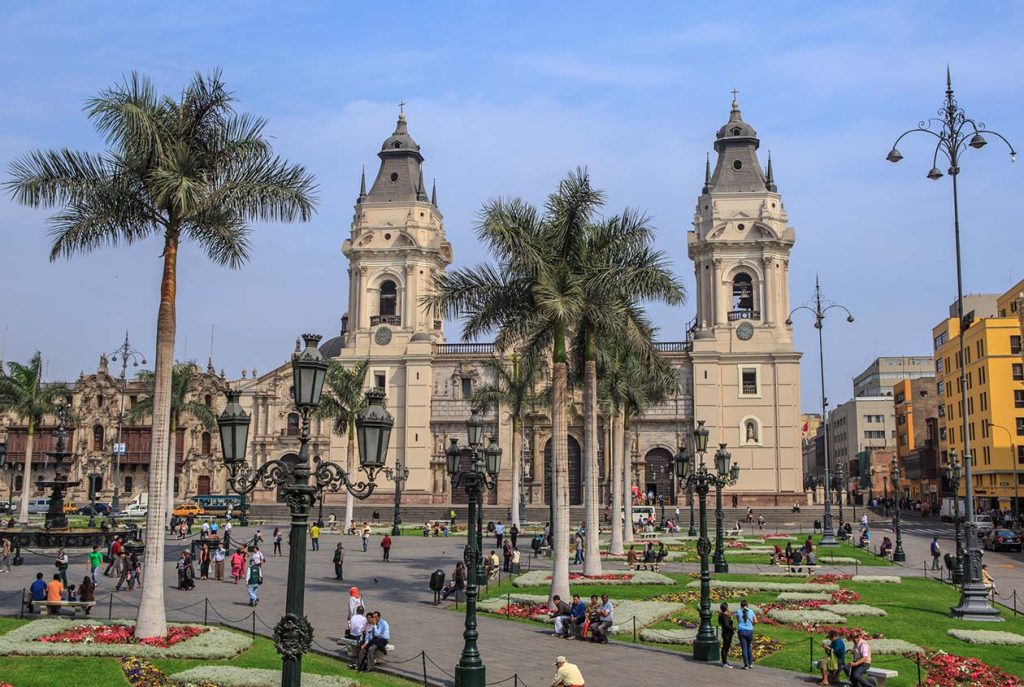
Stepping into Plaza de Armas, the city’s rhythm shifts instantly.
This is not a site designed for visual spectacle; rather, it is a place where function and history overlap.
The plaza itself is compact, yet surrounded by a high density of buildings—historic churches, government offices, and commercial facilities form a ring around it.
As I sat on a bench observing the flow of people, I noticed a pattern: the visitors here are not the type to linger; they are passersby. They converge here but do not stay for long.
Street performers, tourists, and locals coexist in the same space, yet each moves to a different rhythm.
This plaza gave me my first real understanding of Santiago’s urban structure: history here is not isolated or preserved behind glass, but embedded in everyday life.
La Moneda Palace: A space of order and urban authority
Walking from the plaza to La Moneda Palace, the atmosphere of the space changes noticeably.
The building’s exterior is remarkably restrained—devoid of ornate decoration, yet possessing perfectly balanced proportions. Its style emphasizes the gravitas of a seat of power rather than mere visual appeal.
While lingering on the perimeter to watch the changing of the guard and the surrounding order, I noticed the area was quiet—not empty, but characterized by a sense of “controlled stillness.”
Traffic flowed normally on the surrounding streets, yet there was no sense of chaos.
It feels less like a tourist attraction and more like a “stabilizing node” within the city’s operational system.
Santiago Metropolitan Park: A breathing space for the city
Parque Metropolitano de Santiago was one of the places where I spent the most time in the city.
It is more than just a park; it functions as a systematic network of urban green space.
Upon entering the park, the pace of life shifts noticeably. Paths widen, ambient noise fades, and visual clutter diminishes.
Yet, it is not “pure nature,” but a structure where the artificial and the natural blend together.
I walked through it for a long time, encountering joggers, families, and tourists, yet the space never felt crowded.
What I found most interesting was that, from certain vantage points, one could see the city’s skyscrapers and the Andes Mountains simultaneously—with no clear boundary separating the two.
The Wine Route: Extending the rhythm beyond the city
Trips starting in Santiago often extend to the wine-producing regions of Chile’s Central Valley.
I joined a winery tour, and the urban structure changed completely in this setting. The vineyards stretch out in orderly rows across an expansive landscape, free from the sense of vertical oppression often found in cities.
The pace of the winery tour was noticeably unhurried; the explanations, tastings, and strolls were all deliberately drawn out.
As I tasted a particular red wine, I had a distinct impression: it did not merely emphasize complexity of flavor, but rather the sense of depth that comes with the passage of time.
This experience stood in stark contrast to the frenetic pace of city life.
Santiago is a city that can be “read in layers”
Throughout my trip to Santiago, I came to realize that its tourism structure is remarkably clear:
You view the city’s overall silhouette from Cerro San Cristóbal, grasp its finer details from Cerro Santa Lucía, enter its historical heart at Plaza de Armas, understand its structural order at La Moneda Palace, feel the city’s pulse in Parque Metropolitano de Santiago, and finally extend your journey into the natural landscapes and wine country of Chile’s Central Valley.
It is not a city merely for “checking off” tourist attractions, but a structured entity that invites you to explore it layer by layer.
What stayed with me after leaving was not any single landmark, but the way the city unfolds across varying elevations, distances, and rhythms.